

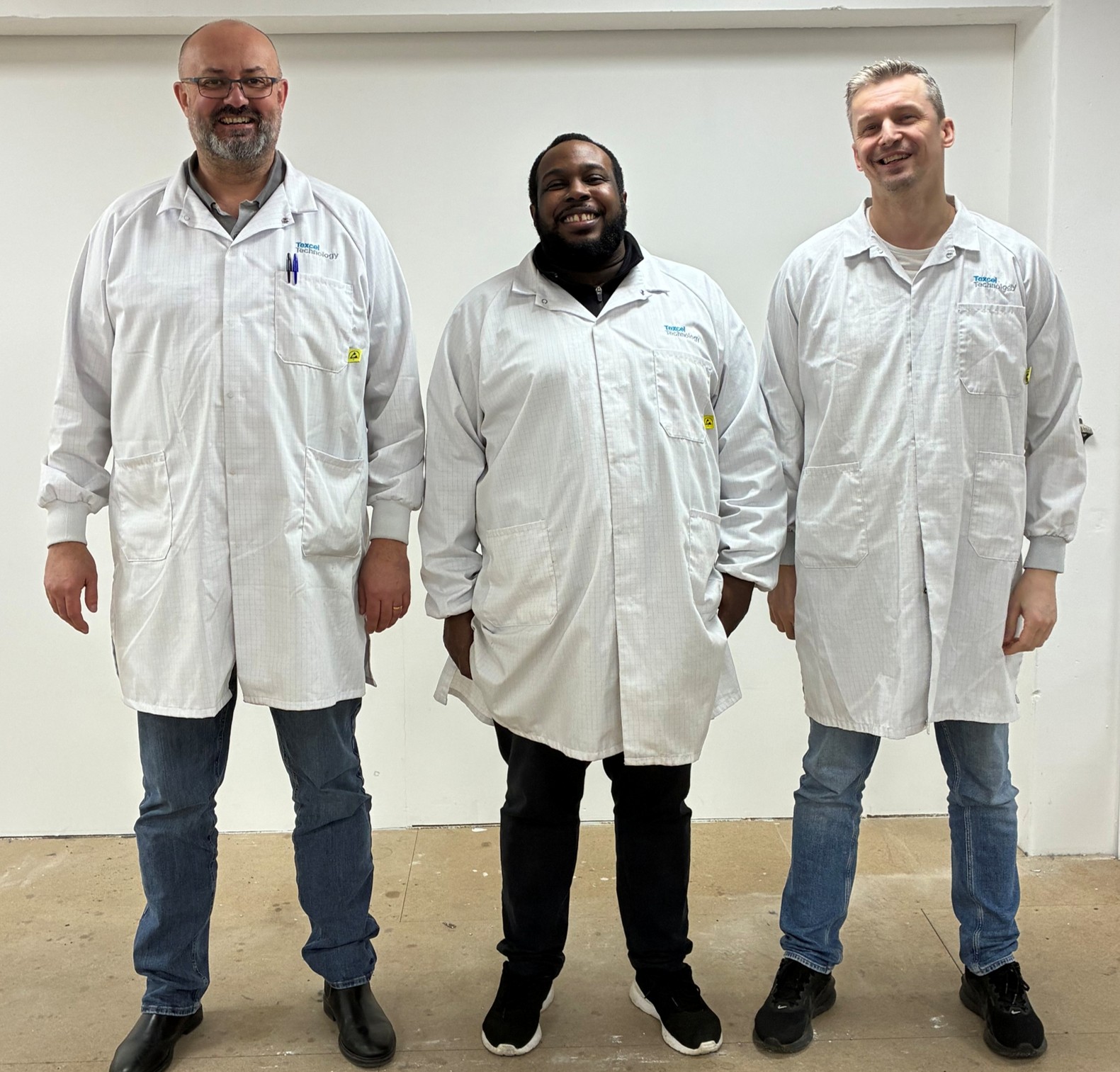
In this profile, we speak with Michael Taylor about what quality really looks like on the ground at Texcel Technology. With a career spanning regulated industries, laboratory environments and global programmes, Michael brings a hands-on, data-driven approach to managing quality in a fast-moving, high-mix manufacturing environment. Read the full profile to find out why, in his words, “if it’s not written down, it’s just a rumour.”
Michael Taylor joined Texcel Technology as Quality Manager in July 2024, bringing with him three decades of hard-won experience across pharmaceuticals, scientific services and corporate quality systems. He talks with characteristic warmth and directness about what it really takes to keep quality alive on a fast-moving production floor, and why a smaller business can often move faster than the giants when it chooses to.
Spend an hour with Michael and you quickly notice something. He has the kind of easy, unhurried manner that makes a complex subject feel entirely manageable. He does not talk down to anyone. He does not reach for jargon when a plain word will do. When he explains how a heat map works, or capacity monitoring, he does it in a way that leaves you feeling like you understood it all along. There is a dry wit in there too, the kind that surfaces quietly and catches you slightly off guard. He looks the part of a serious professional, which he absolutely is, but scratch the surface and you find someone who clearly enjoys the work and the people around him in equal measure. That quality, the ability to make the technical feel genuinely human, runs through everything he does. There is a phrase he returns to throughout conversation, one he has clearly lived by long enough that it no longer feels like a mantra. It just feels like common sense. "If it's not written down," he says, with a slight grin, "it's just a rumour."
Grounded beginnings, practical mindset
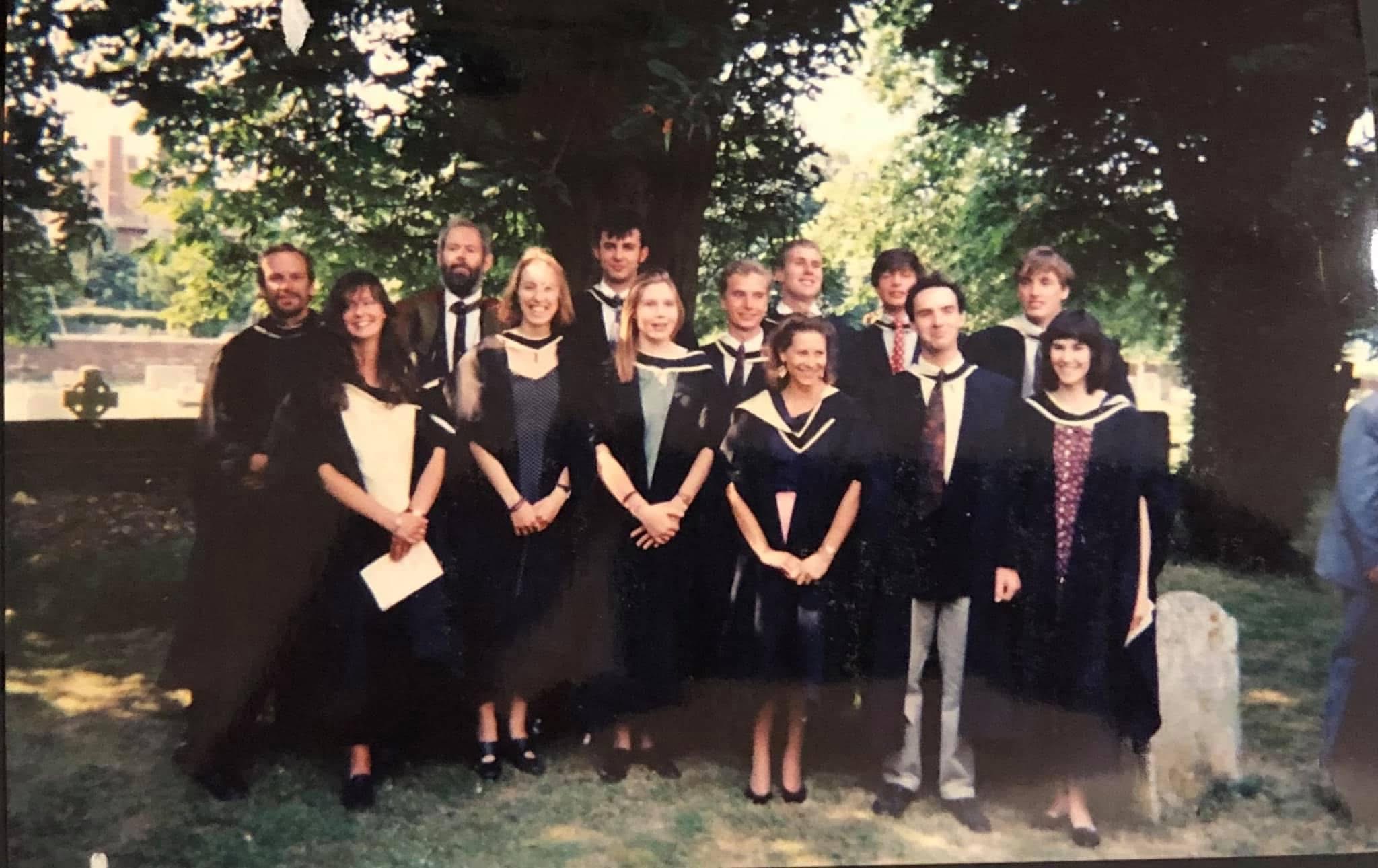
Michael grew up in Dartford, Kent and attended Wilmington Grammar School, a place he describes with obvious affection as "closer to Grange Hill than anything else." He clearly enjoyed it. He went on to read Environmental Science at Wye College, a choice that was very much a product of its time. Environmental issues were rising up the political agenda in the late 1980s and a science-minded teenager with A-levels in Biology, Sociology and Geography found himself drawn toward that wave. By his own admission he had lofty ideals. A career auditing pharmaceutical laboratories and calibrating humidity chambers was not quite what he had pictured. Yet in retrospect the thread running through all of it is unmistakably consistent.
A career built on transferable skills
The formative chapter came in the early 2000s when Taylor and a business partner established Cirrus Laboratories, a contract testing company that would eventually play a role in keeping cancer drugs on the market following the closure of a major pharmaceutical site. He set up the quality system entirely from scratch. The company was subsequently audited by the US Food and Drug Administration and separately by the UK's Medicines and Healthcare products Regulatory Agency. Both passed. "After you get those big regulatory audits under your belt," he says, leaning forward slightly, "you're completely cemented in quality." He says it not with pride exactly but with the quiet satisfaction of someone who has been genuinely tested and came through well.
The business was sold in 2005. Michael stayed on under covenant before moving to Thermo Fisher Scientific where he spent seventeen years. He first managed a major service account at the Pfizer Sandwich site then built and ran the quality function for a calibration division, including achieving UKAS accreditation for a humidity calibration methodology that few service organisations at the time had the capability to offer. The role grew and expanded and eventually became global in scope, drawing him into supply management responsibilities spanning the east coast of the United States, Singapore and Lithuania.
The draw of the production floor
"I'd had enough of remote working," he says plainly, without a trace of bitterness. "I just fancied being somewhere where I was back working with people. Being able to see and touch something being manufactured. Being able to change things and actually see it happen." When a quality manager role came up at Texcel Technology the timing felt right. He joined in July 2024 and the difference, he says, was immediate.
Quality in a fast-moving environment
Central to his role is one familiar to quality professionals in any high-velocity contract manufacturing environment: keeping quality rigorous without becoming a bottleneck. "The biggest pressure," he says without hesitation, "comes from the beast that is production." Manufacturing runs through the heart of the business. Any concession query or non-conformance requiring investigation carries with it the potential to hold up the line. That demands a particular kind of proportionality. Part of his skill is knowing which issues warrant a full formal response and which can be dealt with efficiently and cleanly without compromising integrity.
"I can't put the brakes on in the wrong place," he says. It is a careful balance. He needs to maintain the standards that customers rightly expect from a contractor building safety-critical electronics whilst staying agile enough to keep pace with a production schedule that, on any given month, may cover well over a hundred distinct products from an equally diverse range of customers. The variety, he notes, was very much part of the attraction.
His approach to managing this tension is systematic without being rigid. He attends the daily production meeting without fail. In his assessment it is one of the most valuable touchpoints in the working day: the place where issues surface early, where communication can be compressed into a single forum and where the quality function stays visible to production rather than operating somewhere behind a closed door.
Data as a quality instrument
Michael is, by inclination, a visual thinker who can manage large amounts of data. He carries with him a working habit from his pharmaceutical years: the instinct to map a process before attending to its detail. "If I get the mapping right I can put the detail on it," he says. "But for me it always starts with the process." At Texcel this has translated into a practical Excel-based quality dashboard that draws together delivery schedules, internal exception data and customer non-conformances into a single heat-mapped view, updated weekly and shared with production management. The tool lets him flag known problem areas before a product reaches the line rather than reacting after the fact.
He is noticeably enthusiastic when he pulls up a second heat map, built to model the manufacturing capacity of a major incoming programme. By overlaying product volumes, process routings and cycle times across a single visual grid he was able to identify, before the programme even landed on the floor, that oven capacity rather than the spray booth was the actual constraint. The analysis showed the site running at over two hundred per cent of available oven throughput. "Without this," he says, gesturing at the spreadsheet with the easy confidence of someone who genuinely enjoys this kind of problem, "it's just assumptions."
"Quality is not a differentiator any more. It is expected. The question is whether you can maintain it at pace, proportionately, without putting the brakes on in the wrong place."
What comes next
The immediate priority is clear to him, modernising documentation and looking to move to an electronic quality management system bringing Texcel's already solid quality infrastructure into a single controlled and fully visible platform, with revision management, approval workflows, live metrics and integrated non-conformance tracking. embedding them properly in the business and ensuring the accumulated knowledge of an experienced workforce is properly captured and formalised. "Undocumented process is rumour," he says. "It is not enforceable, not transferable and not defensible if a customer ever needs it to be."
What quality actually means
Ask Michael what quality means to him in a single sentence and he reaches for the phrase that has run through the whole conversation, the one he has clearly carried with him through pharmaceutical audits, calibration labs, global supply chains and now an electronics production floor across the UK. It has the ring of something tested in practice rather than invented for effect. "If it's not written down," he says, the grin returning, "it's just a rumour." At Texcel Technology, the work of turning rumour into record and keeping that record alive under daily production pressure is now very much his.